
Key takeaways
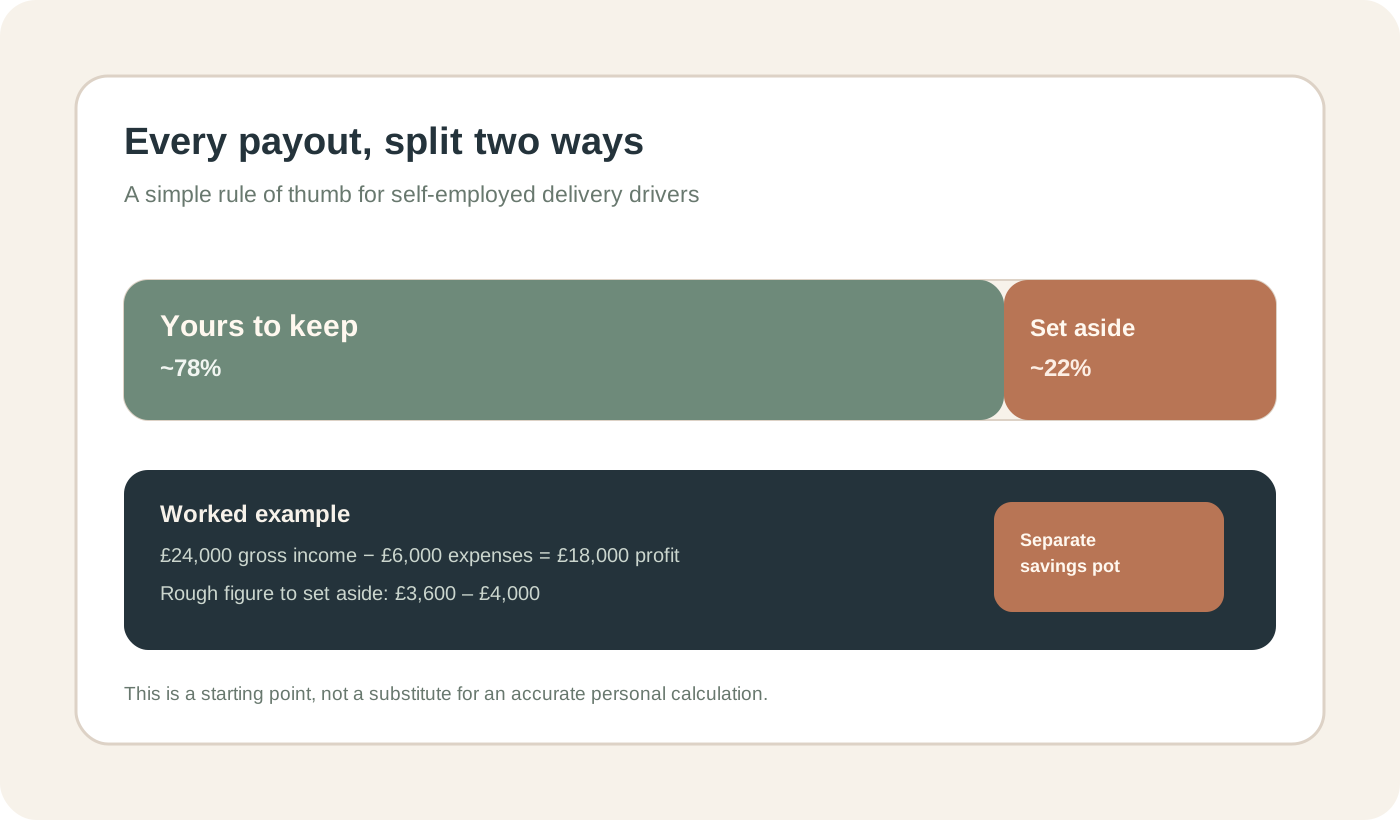
- A simple starting rule of thumb is to set aside 20-25% of profit for most drivers, more if profit is higher.
- Income Tax and Class 4 National Insurance are both due on profit after allowable expenses, not on gross payouts.
- Payments on Account can mean paying towards next year's tax bill alongside this year's, if your bill is over £1,000.
- Setting aside a fixed percentage every time you're paid is far less painful than finding a lump sum in January.
- The right percentage depends on your total income, including any employment alongside driving.
One of the most common questions from delivery drivers isn't about expenses or mileage — it's simpler than that. How much of what lands in the bank account each week is actually theirs to spend? Here's a straightforward way to think about it.
Quick answer: what percentage should I set aside?
As a starting point, most self-employed delivery drivers should set aside roughly 20-25% of their profit (income after allowable expenses) for tax. If your profit is higher, or you have other income pushing you into a higher tax band, that percentage should go up — this is a starting rule of thumb, not a substitute for an actual calculation.
Why it's based on profit, not gross payouts
Tax is calculated on your profit — what's left after allowable expenses like mileage, insurance, and equipment — not on the total amount platforms pay you. Two drivers earning the same gross income can owe very different amounts of tax if one claims their expenses properly and the other doesn't.
What the percentage actually covers
Setting aside for tax means covering two things: Income Tax on your profit, and Class 4 National Insurance, which is also based on profit above a threshold. For most drivers with moderate profit, a combined rate in the 20-29% range on profit is a reasonable planning figure, but this rises as profit increases into higher tax bands.
A simple worked example
A driver with £24,000 gross delivery income and £6,000 of allowable expenses has £18,000 profit.
| Item | Amount |
|---|---|
| Gross delivery income | £24,000 |
| Allowable expenses | £6,000 |
| Profit | £18,000 |
| Rough amount to set aside (20–22%) | £3,600 – £4,000 |
Setting aside a figure in that range as a rough planning buffer leaves reasonable headroom for the eventual Income Tax and Class 4 National Insurance bill, though the exact amount depends on any other income and personal allowances.
Payments on Account can catch drivers out
If your Self Assessment bill is over £1,000, HMRC usually asks for Payments on Account — two advance instalments towards next year's tax, paid alongside this year's bill. In your first year of paying this, it can effectively feel like paying one and a half years of tax at once, which is why setting aside more than you think you need in year one is a sensible habit.
A simple saving habit that works
- Open a separate savings account just for tax money
- Every time a platform pays you, transfer your chosen percentage across immediately
- Review the percentage every few months as your income changes
- Never treat the tax savings account as spare cash, even in a quiet month
If driving is a side income alongside employment
If you're employed as well as driving, your delivery profit is taxed on top of your employment income, often at your highest marginal rate. This usually means a higher percentage should be set aside than for someone driving as their only income.
How Aurestone helps
We calculate an accurate, personalised tax estimate for delivery driver clients based on their actual income and expenses, not a generic rule of thumb, and help make sure Payments on Account never comes as a surprise. See our accountant for delivery and courier drivers page.
What to read next
Sources checked
Checked against HMRC guidance on Income Tax rates, Class 4 National Insurance, and Payments on Account.
Frequently asked questions
Is 20-25% always enough?
Not always — it's a starting point for moderate profit levels. Higher earners, or drivers with other taxable income, should set aside more. We calculate your actual position rather than relying on a flat percentage.
What are Payments on Account?
Advance instalments towards next year's tax bill, usually required if your Self Assessment bill is over £1,000. They're paid alongside your normal tax bill in January and again in July.
Should I set aside tax on gross income or profit?
Profit — income after allowable expenses. Setting aside a percentage of gross income usually means putting aside far more than you actually need.
What if I've fallen behind on saving for tax?
It's fixable. We can help you work out what you actually owe, get a catch-up plan in place, and talk to HMRC about a Time to Pay arrangement if needed.
Topics
Delivery driver accounting
Want an accurate number, not a rule of thumb?
Book a free Tax & Finance Review and we'll calculate exactly what you should be setting aside based on your real income and expenses.
Next step
Want help applying this to your own tax and profit numbers?
Download the free tax guide, or book a quick review if you want Aurestone to help you spot what needs attention first.