
Key takeaways
- You must choose one method per vehicle and stick with it for as long as you use that vehicle for the business.
- The mileage rate is 45p per mile for the first 10,000 business miles each tax year, then 25p per mile after that.
- Actual costs include fuel, insurance, servicing, repairs, and capital allowances, apportioned for business use.
- High-mileage drivers in an efficient, low-cost vehicle often do better on the mileage rate; drivers with an expensive-to-run vehicle or a car bought on finance may do better on actual costs.
- Whichever method you choose, the quality of your records is what makes the claim stand up.
Every self-employed delivery driver has to make this decision at some point: claim HMRC's flat mileage rate, or add up the actual cost of running the vehicle. Both are legitimate. Neither is automatically better. The right answer depends on the vehicle, the mileage, and how it's used.
Quick answer: which method should I use?
There's no single right answer, but as a rule of thumb: if you drive a fuel-efficient, low-maintenance vehicle and do high mileage, the flat mileage rate usually works out simpler and often more generous. If your vehicle is expensive to run, on finance, or you do relatively low business mileage with high fixed costs, actual costs can work out better. We calculate both for every driver client and use whichever comes out ahead.
How the mileage rate works
HMRC's simplified mileage rate for cars and vans is 45p per business mile for the first 10,000 miles in a tax year, then 25p per mile after that. This single rate is meant to cover fuel, wear and tear, insurance, and servicing — you can't add fuel receipts on top if you use this method. You just need an accurate log of business miles driven.
How the actual costs method works
Under actual costs, you total up the real running costs of the vehicle — fuel, insurance, road tax, servicing, repairs, and the vehicle's own cost through capital allowances — then apportion the total between business and private use based on mileage. This needs more detailed records but can reflect the true cost of an expensive-to-run vehicle more accurately than a flat rate.
A worked example
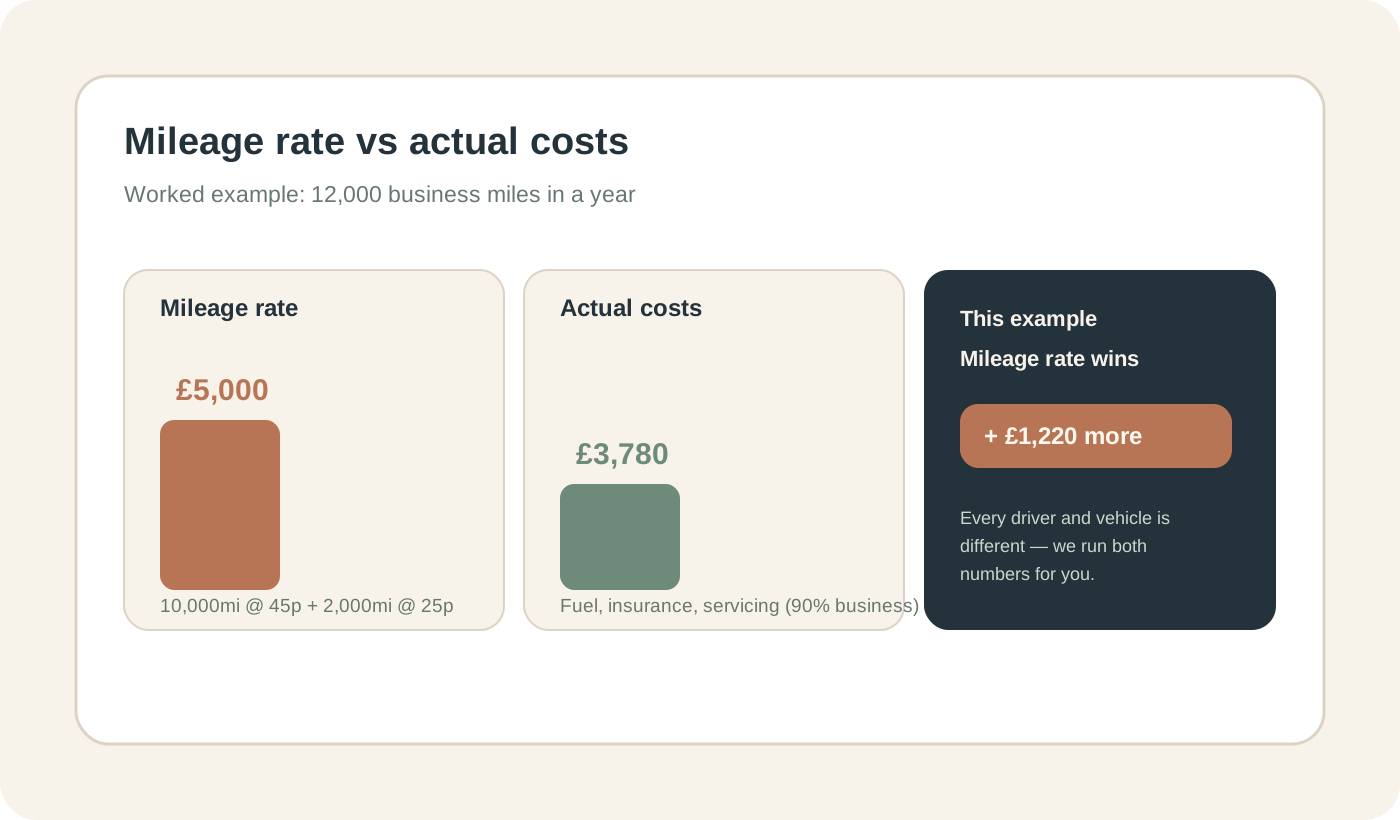
Take a driver covering 12,000 business miles a year in a small, efficient car.
| Mileage rate | Actual costs | |
|---|---|---|
| Basis | 10,000mi @ 45p + 2,000mi @ 25p | Fuel, insurance, servicing, MOT (90% business use) |
| Claim for the year | £5,000 | £3,780 |
| Admin needed | A simple mileage log | Receipts for every cost |
In this example, the mileage rate gives a higher claim and needs far less admin. A driver in an older, less efficient vehicle with higher running costs, or one making loan or lease payments, could easily see the actual costs method come out ahead instead — which is why it's worth running the numbers for your specific vehicle rather than assuming.
When mileage usually wins
- High annual business mileage in a fuel-efficient vehicle
- Low ongoing repair and maintenance costs
- You want simpler record-keeping (a log, not a shoebox of receipts)
When actual costs usually wins
- An older or higher-maintenance vehicle with high running costs
- A vehicle bought outright or on finance, where capital allowances add real value
- Lower annual mileage relative to the vehicle's fixed costs
Can you switch methods?
You choose a method when you start using a vehicle for business and generally stick with it for that vehicle. Switching methods on the same vehicle partway through isn't straightforward, so it's worth comparing both properly before you file your first return — not after.
What records each method needs
For mileage: a simple log of dates, start and end readings (or total miles per trip), and the business purpose. For actual costs: fuel receipts, insurance documents, service and repair invoices, and a record of total mileage split between business and private use, since the apportionment depends on it.
How Aurestone helps
We run both calculations for every delivery driver client using their real numbers, not assumptions, and use whichever method saves the most tax. See our full accountant for delivery and courier drivers page for everything else we cover.
What to read next
Sources checked
Checked against HMRC guidance on simplified expenses and mileage rates and capital allowances.
Frequently asked questions
Can I claim mileage and fuel receipts at the same time?
No. The mileage rate already accounts for fuel and running costs. If you claim mileage, you don't separately claim fuel receipts for the same vehicle.
Does the mileage rate change for vans versus cars?
The 45p/25p rates apply to both cars and vans. Motorcycles have a different flat rate of 24p per mile.
What if I use more than one vehicle during the year?
Each vehicle is treated on its own basis. You could use the mileage rate for one vehicle and actual costs for another, as long as you're consistent for each vehicle individually.
Do I need to keep records if I use the mileage rate?
Yes — HMRC expects a mileage log showing business journeys, even though you're not claiming individual fuel or repair receipts.
Topics
Delivery driver accounting
Not sure which method saves you more?
Book a free Tax & Finance Review and we'll run both calculations on your actual mileage and running costs.
Next step
Want help applying this to your own tax and profit numbers?
Download the free tax guide, or book a quick review if you want Aurestone to help you spot what needs attention first.