
Key takeaways
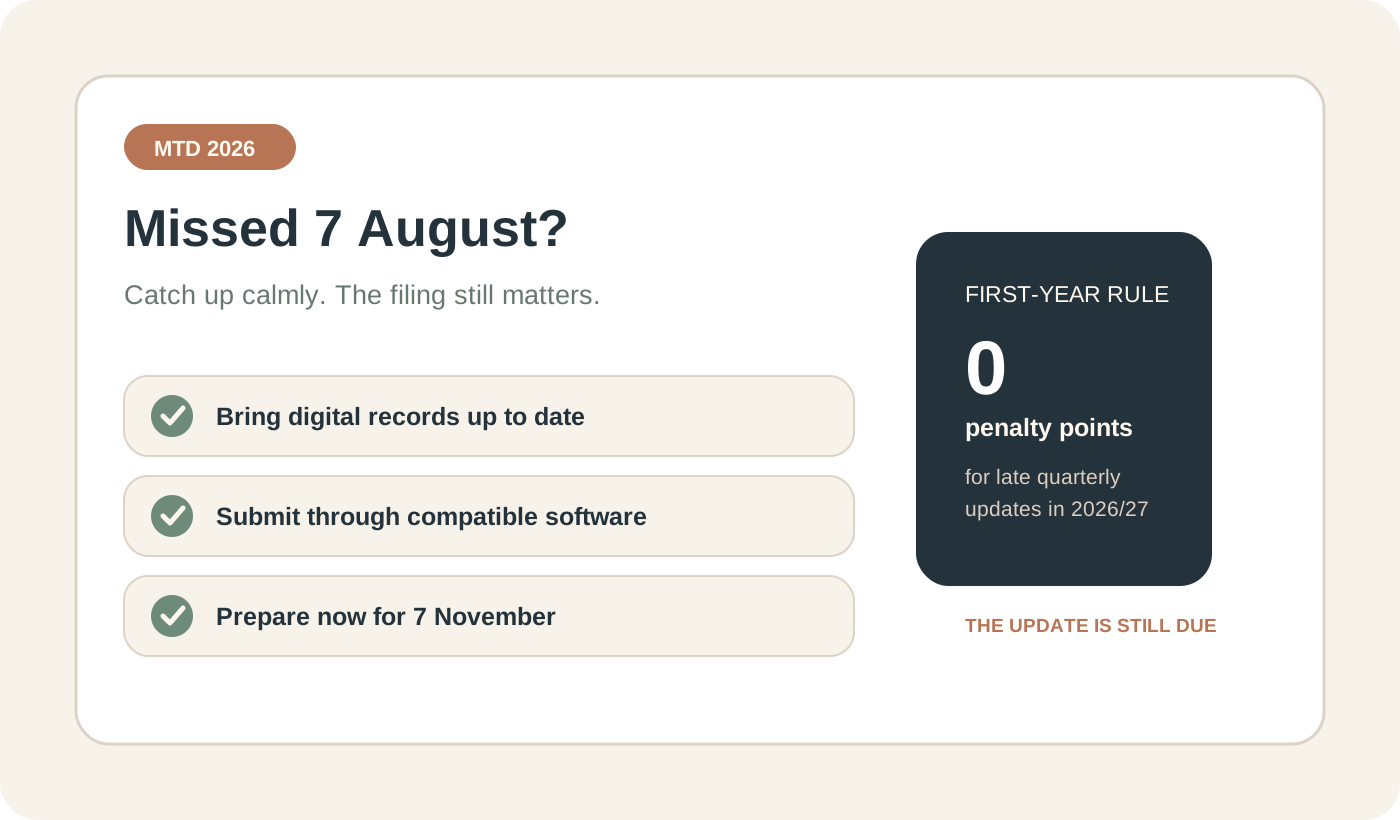
- HMRC will not apply penalty points for late MTD quarterly updates during the 2026/27 tax year.
- You must still send the missing update before you can submit your 2026/27 tax return.
- The first update usually covers 6 April to 5 July 2026, or 1 April to 30 June for calendar update periods.
- Use MTD-compatible software to catch up your digital records and submit the update as soon as practical.
- Late quarterly-update protection does not remove penalties for a late annual tax return or late tax payment.
If you missed the first Making Tax Digital for Income Tax quarterly update deadline on 7 August 2026, do not ignore it—and do not panic.
HMRC has confirmed that it will not apply penalty points for late quarterly updates during the 2026/27 tax year. However, the filing obligation has not disappeared. You still need to bring your digital records up to date and send the missing quarterly update through compatible software.
This guide explains what to do next, how the first-year penalty concession works, and how to stop one missed deadline becoming a year-long bookkeeping problem.
Quick answer: what happens if you missed the 7 August MTD deadline?
Submit the quarterly update as soon as you can through your MTD-compatible software. HMRC says no penalty points will be applied for late quarterly updates in the 2026/27 tax year, so missing this first deadline should not create a quarterly-update penalty.
You still need to file the update. HMRC's guidance says all required quarterly updates must be sent before you can submit your tax return. The first-year concession is breathing space, not permission to skip the filing.
First, check whether the deadline applied to you
The first mandatory MTD Income Tax group started on 6 April 2026. You are generally in this group if you are an individual registered for Self Assessment, receive income from self-employment or property, and had total qualifying income of more than £50,000 on your 2024/25 tax return.
Qualifying income is broadly your gross self-employment and property income before expenses. The sources are combined. For example, gross self-employment income of £32,000 and gross rental income of £21,000 would total £53,000.
Use HMRC's official MTD checker if you are unsure. Do not assume you were outside MTD simply because you did not receive a letter.
What should the late quarterly update include?
For most people using standard update periods, the first update covers digital records from 6 April to 5 July 2026. If your accounting year ends on 31 March and you use calendar update periods, it normally covers 1 April to 30 June 2026.
The update is a summary of income and expenses for each self-employment and property business. It is not a complete tax return, and HMRC says you do not normally need to make year-end accounting or tax adjustments before sending it.
Even if a business had no income or expenses during the update period, HMRC says an update must still be sent for that business.
How to submit a late MTD quarterly update
Work through these steps in order:
- Confirm that MTD for Income Tax applied to you from April 2026.
- Check that you are signed up for MTD and that every active self-employment and property source is included.
- Use software from HMRC's recognised MTD software list.
- Create or catch up digital records from the start of your relevant update period.
- Reconcile bank feeds, invoices, cash income, platform payouts and property transactions.
- Remove duplicates and make sure transfers, loans and personal spending are not treated as business income or expenses.
- Authorise the software to connect to HMRC, then send the missing update.
- Save the submission confirmation and check that the update shows as received.
Use the official HMRC services
Will you receive a penalty for filing late?
HMRC's published guidance says there are no penalties for missing a quarterly update deadline during 2026/27. This applies to the first update due on 7 August 2026 and the other quarterly updates in that tax year.
The position changes after 2026/27. Under the points-based system, a late quarterly update can generate a penalty point. Once the four-point threshold is reached, HMRC can issue a £200 penalty, followed by further £200 penalties for additional missed obligations while the taxpayer remains at the threshold.
The first-year protection applies specifically to quarterly updates. It does not protect you from penalties for a late annual tax return or late payment of tax.
No penalty does not mean no consequence
Leaving the first update unresolved makes the next one harder. MTD updates are cumulative, and your software needs complete digital records from the start of the tax year. HMRC also requires the quarterly updates before the annual tax return can be submitted.
Catching up now is usually easier than trying to reconstruct several quarters from bank statements, receipts and platform reports later.
What if your software will not submit the update?
Start with the error message rather than repeatedly pressing submit. Check that the software supports MTD for Income Tax, not only MTD for VAT. Confirm that your Government Gateway authorisation is still active and that the correct business or property source is connected.
If the figures are wrong, correct the underlying digital records before submitting. If the connection or calculation still fails, contact the software provider first and keep a record of the error, the date, and the steps you took. You can also use HMRC's MTD help and support resources.
What if you are a landlord or have more than one business?
MTD applies across your qualifying self-employment and property income, but your records still need to distinguish each income source correctly. A landlord with rental income and a separate sole-trader business should not combine every transaction into one undifferentiated total.
Check that the software contains each active business and property source and that income and expenses have been assigned to the right one. If you ceased an income source during the first quarter, HMRC may still require the update due on 7 August for that source.
Can you apply for an MTD exemption after missing the deadline?
Some people are automatically exempt, and others may apply when it is not reasonable or practical for them to use digital tools because of factors such as age, disability, location, religion or another relevant circumstance.
An exemption is not automatic because the deadline was missed or bookkeeping is behind. HMRC says that if you have already signed up and your circumstances have changed, you should generally continue using MTD while it considers your application. Read the official exemption guidance before relying on an exemption.
The remaining MTD deadlines for 2026/27
Once the first update is submitted, add the remaining dates to your calendar:
- Second quarterly update: 7 November 2026
- Third quarterly update: 7 February 2027
- Fourth quarterly update: 7 May 2027
- 2026/27 MTD tax return and tax payment: 31 January 2028
How to avoid missing the next quarterly update
Treat MTD as a bookkeeping routine rather than four isolated filing events. Reconcile the bank feed monthly, record cash transactions promptly, photograph receipts while they are still readable, and review uncategorised items before the quarter ends.
Set an internal bookkeeping deadline at least two weeks before the HMRC deadline. That gives you time to resolve missing records, software authorisation problems and questions for your accountant without working against the clock.
For more preparation help, read What Records Must Sole Traders Keep Under Making Tax Digital? and MTD Software for Sole Traders: What You Actually Need.
How Aurestone can help you catch up
Aurestone Advisory helps sole traders and landlords check whether MTD applies, clean up digital records, configure compatible software and prepare overdue quarterly updates.
If your first update is late, the most useful next step is a clear catch-up plan: confirm what is missing, fix the records, submit the update, and put a repeatable process in place before 7 November.
Important note
This article provides general information and was checked against HMRC guidance available on 6 August 2026. Your obligations may depend on your income, accounting period, business structure and exemption status. Check the current GOV.UK MTD collection or ask a qualified accountant about your circumstances.
Making Tax Digital resource centre
Check the rule, deadline and support that applies to you
Start with the complete guide, check your quarterly dates, or see how Aurestone can manage the digital records and submissions for you.
Frequently asked questions
Is there a penalty for missing the 7 August 2026 MTD deadline?
HMRC says it will not apply penalty points for late quarterly updates during the 2026/27 tax year. You must still send the missing update before you can submit your annual tax return.
Can I submit an MTD quarterly update after the deadline?
Yes. Bring your digital records up to date and submit the missing update through MTD-compatible software as soon as practical. Save the submission confirmation.
What period did the first MTD update cover?
For standard update periods, it generally covered 6 April to 5 July 2026. For calendar update periods, it generally covered 1 April to 30 June 2026. Both had a 7 August 2026 submission deadline.
Do I still need to submit if I had no income?
Yes. HMRC says you must still send a quarterly update for an active business or property source even if there was no income or expense during the latest update period.
Does the quarterly update replace my Self Assessment tax return?
No. MTD quarterly updates are summaries of income and expenses. You still need to submit the required annual tax return and pay the tax due by the relevant deadline.
What should I do if my MTD software will not submit?
Check that it supports MTD for Income Tax, confirm the HMRC authorisation and connected income sources, and review the error message. Contact your software provider first if the issue continues, and keep evidence of the problem.
Topics
Behind with MTD?
Turn the missed deadline into a clear catch-up plan
We can help you confirm what is missing, clean up the records and prepare your overdue MTD quarterly update.
Next step
Want help applying this to your own tax and profit numbers?
Download the free tax guide, or book a quick review if you want Aurestone to help you spot what needs attention first.