
Key takeaways
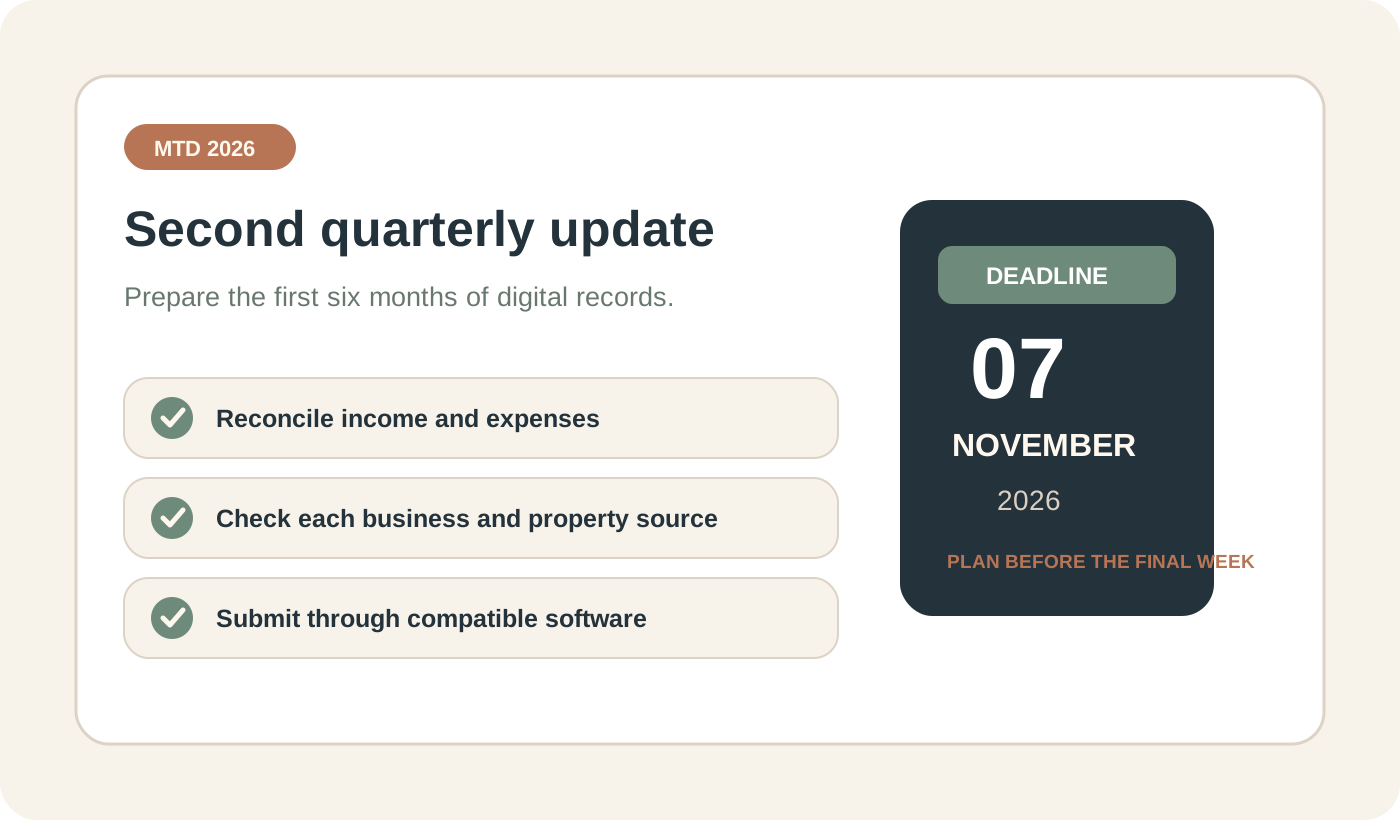
- The second MTD quarterly update for 2026/27 is due by 7 November 2026.
- A standard-period update normally covers cumulative records from 6 April to 5 October 2026.
- You need a separate update for each active self-employment and property business shown in your MTD account.
- Quarterly figures do not normally need final year-end accounting or tax adjustments before submission.
- HMRC will not apply penalty points for late quarterly updates during the 2026/27 tax year, but the filing is still required.
- If the first update was missed, bring the full six months of digital records up to date before submitting the second update.
The second Making Tax Digital for Income Tax quarterly update is due by 7 November 2026 for sole traders and landlords who entered MTD from April 2026.
For most people using standard update periods, this update covers records from 6 April to 5 October 2026. It is cumulative, so it includes the first six months of the tax year rather than only the latest three months.
This guide explains who needs to submit, what the update should contain, how to prepare your records, and what to do if the first quarterly update was missed.
Quick answer: what is due on 7 November 2026?
If MTD for Income Tax applies to you from April 2026, send your second quarterly update through compatible software by 7 November 2026. For standard update periods, the update is based on your cumulative digital records from 6 April to 5 October 2026.
The update contains category totals for income and expenses for each relevant business or property source. It is not a second tax return and it does not create a separate tax payment on 7 November.
Who must submit the second MTD quarterly update?
The first mandatory MTD for Income Tax group began on 6 April 2026. You are generally in scope if you are an individual registered for Self Assessment, receive income from self-employment or property, and your total qualifying income was more than £50,000 on your 2024/25 tax return.
Qualifying income broadly means gross self-employment and property income before expenses. The sources are combined when HMRC checks the threshold. Employment income, dividends and pension income do not form part of this qualifying-income calculation.
Use HMRC's official checker if you are uncertain whether the requirement applies to you.
Which dates does the second quarterly update cover?
Under standard update periods, the second update is cumulative and normally covers 6 April to 5 October 2026. The submission deadline is 7 November 2026.
If you elected to use calendar update periods, it normally covers 1 April to 30 September 2026, with the same 7 November deadline.
Cumulative reporting is important. You do not send only the transactions from the second three-month period. Your software uses the digital records held from the beginning of the tax year and sends the totals accumulated to the end of the second period.
What should be included in the update?
Before submitting, make sure the digital records for each income source include:
- All self-employment sales, fees, cash income and platform payouts received or recorded during the relevant period.
- Property income, including rent and other amounts connected with the UK or foreign property business.
- Business expenses recorded in the categories supported by your MTD software.
- Corrections to transactions that were duplicated, omitted or assigned to the wrong category in the first quarter.
- Separate records for each self-employment and property source connected to your MTD account.
- A nil update for an active source where HMRC still requires an update but no income or expenses arose.
The quarterly update is not a mini tax return
HMRC says you do not normally need to make accounting or tax adjustments before sending a quarterly update. The update is based on the digital income and expense records held in your software.
You will correct and finalise the records after the tax year, add other taxable income, make the relevant claims and adjustments, and submit the annual tax return through compatible software. The quarterly estimate shown by HMRC is not a final tax bill.
What if you missed the first MTD update?
Do not wait until November and enter only the latest three months. Bring your digital records up to date from the beginning of the tax year. HMRC's service guidance explains that a person who missed the first deadline can still send the second cumulative update by 7 November.
First check whether your software shows an outstanding first obligation. Depending on the software and HMRC connection, you may need to send the late first update and then the second one, or follow the cumulative process presented in the product. Save every submission receipt and contact the provider if the obligation list is unclear.
Read Missed the 7 August MTD Deadline? What to Do Next for the full catch-up process.
Your practical preparation checklist
Aim to complete these checks at least two weeks before the deadline:
- Confirm that the correct businesses and property sources appear in your MTD software.
- Reconcile bank feeds and investigate missing, duplicated or unmatched transactions.
- Record cash sales, cash expenses and income received outside the main business bank account.
- Check marketplace and payment-platform reports against the net deposits received.
- Separate personal spending, transfers, loan movements and capital introduced from business expenses.
- Review uncategorised transactions and attach missing invoices or receipts.
- Renew the Government Gateway authorisation if the software connection has expired.
- Submit early enough to resolve a software or HMRC connection error before 7 November.
- Save the submission confirmation and review the updated HMRC estimate.
What happens if the second update is late?
HMRC has confirmed that it will not apply penalty points for late quarterly updates during the 2026/27 tax year. That first-year concession includes the update due on 7 November 2026.
The requirement to submit has not been removed. Outstanding updates can prevent you from completing the annual MTD tax return correctly, and late annual returns or late tax payments remain subject to their own rules. Treat the concession as time to correct a genuine problem, not as a reason to postpone bookkeeping.
After the first-year concession, the points-based penalty system can apply to missed quarterly obligations.
Check the current HMRC guidance
How Aurestone can help before 7 November
Aurestone Advisory can check whether MTD applies, review the first six months of records, clean up bookkeeping, configure compatible software and prepare the quarterly update.
The most useful time to ask for help is before the final week. That leaves enough time to trace missing income, correct bank-feed problems and obtain software authorisation without turning the deadline into an emergency.
Important note
This article provides general information and was checked against HMRC guidance available on 17 August 2026. Tax rules and software processes can change, and your obligations depend on your income sources and circumstances. Check current GOV.UK guidance or ask a qualified accountant before acting.
Making Tax Digital resource centre
Check the rule, deadline and support that applies to you
Start with the complete guide, check your quarterly dates, or see how Aurestone can manage the digital records and submissions for you.
Frequently asked questions
When is the second MTD quarterly update due?
The second MTD for Income Tax quarterly update for 2026/27 is due by 7 November 2026.
What period does the second MTD update cover?
For standard update periods it normally covers cumulative digital records from 6 April to 5 October 2026. Calendar update periods normally cover 1 April to 30 September 2026.
Is the second quarterly update a full tax return?
No. It is a summary generated from digital income and expense records. Final corrections, claims and other taxable income are dealt with through the annual MTD tax return process.
Can I submit the second update if I missed the first one?
Yes. Bring the complete digital records up to date from the start of the tax year and follow the outstanding-obligation process shown by your MTD software. HMRC guidance allows the second cumulative update to be sent by 7 November.
Will HMRC issue a penalty if the November update is late?
HMRC says it will not apply penalty points for late quarterly updates during 2026/27. The update is still required, and separate annual-return and payment penalties can still apply.
Do I pay tax when I submit the November update?
No separate tax payment is created simply by submitting the quarterly update. Your normal Self Assessment payment obligations continue to apply.
Topics
Prepare before the deadline
Get your second MTD update ready without a last-minute scramble
Aurestone can review your records, resolve software issues and prepare the quarterly update due by 7 November 2026.
Next step
Want help applying this to your own tax and profit numbers?
Download the free tax guide, or book a quick review if you want Aurestone to help you spot what needs attention first.