
Key takeaways
- Making Tax Digital for Income Tax starts from 6 April 2026 for sole traders and landlords with qualifying income over 50,000 pounds.
- The threshold is based on gross qualifying income before expenses, not profit.
- Quarterly updates are summaries from digital records, not four full tax returns.
- HMRC does not provide MTD software, so affected taxpayers need compatible software or a bridging-software setup.
- The 20,000 pound threshold takes effect from 6 April 2028, bringing more self-employed people and landlords into scope.
Making Tax Digital for Income Tax is one of the biggest changes to Self Assessment in years. If you are self-employed, a freelancer, a sole trader, a landlord, or a small business owner, the way you keep records and report income to HMRC is changing.
The change does not have to become another deadline problem. With the right software, cleaner bookkeeping, and a clear view of whether you are inside the rules, MTD can give you better visibility over profit, tax, and cash flow throughout the year.
This guide explains what Making Tax Digital means in 2026, who must use it, the quarterly deadlines, what software you need, how it affects sole traders and landlords, and when a limited company may be worth discussing with an accountant.
What is Making Tax Digital for Income Tax?
Making Tax Digital, often shortened to MTD, is HMRC's move towards digital record keeping and more regular tax reporting. MTD has already applied to VAT for several years. From April 2026, it extends to Income Tax for many sole traders and landlords.
Instead of relying only on one annual Self Assessment process, affected taxpayers must keep digital records of income and expenses, use compatible software, send quarterly updates to HMRC, and then submit the final tax return information through that software.
The key point is this: quarterly updates are not four full tax returns. They are summary updates created from your digital records. Your final tax position is still confirmed after the tax year, and the 31 January tax-return and payment deadline remains important.
Who has to use Making Tax Digital from April 2026?
Making Tax Digital for Income Tax is being introduced in phases. HMRC looks at your qualifying income, which means turnover from self-employment and property income before expenses.
For the first phase, you need to use MTD from 6 April 2026 if your 2024/25 Self Assessment tax return showed qualifying income over 50,000 pounds. From 6 April 2027, the threshold falls to 30,000 pounds. From 6 April 2028, it falls again to 20,000 pounds.
That means a sole trader with turnover of 52,000 pounds and profit of 28,000 pounds can still fall into the first phase, because HMRC uses gross income rather than profit. If you have both self-employment income and rental income, HMRC can combine them when checking the threshold.
Income such as PAYE employment, dividends, savings interest, private pensions, and your share of partnership profit as an individual partner generally does not count towards qualifying income, but it may still need to be included in your end-of-year tax return.
MTD start dates at a glance
Use these dates as the first filter before checking your own Self Assessment figures.
- 6 April 2026: qualifying income over 50,000 pounds, based on the 2024/25 tax return.
- 6 April 2027: qualifying income over 30,000 pounds, based on the 2025/26 tax return.
- 6 April 2028: qualifying income over 20,000 pounds, based on the 2026/27 tax return.
- The test is gross qualifying income before expenses, not taxable profit.
- Self-employment income and property income can be added together.
What are the MTD quarterly deadlines for 2026/27?
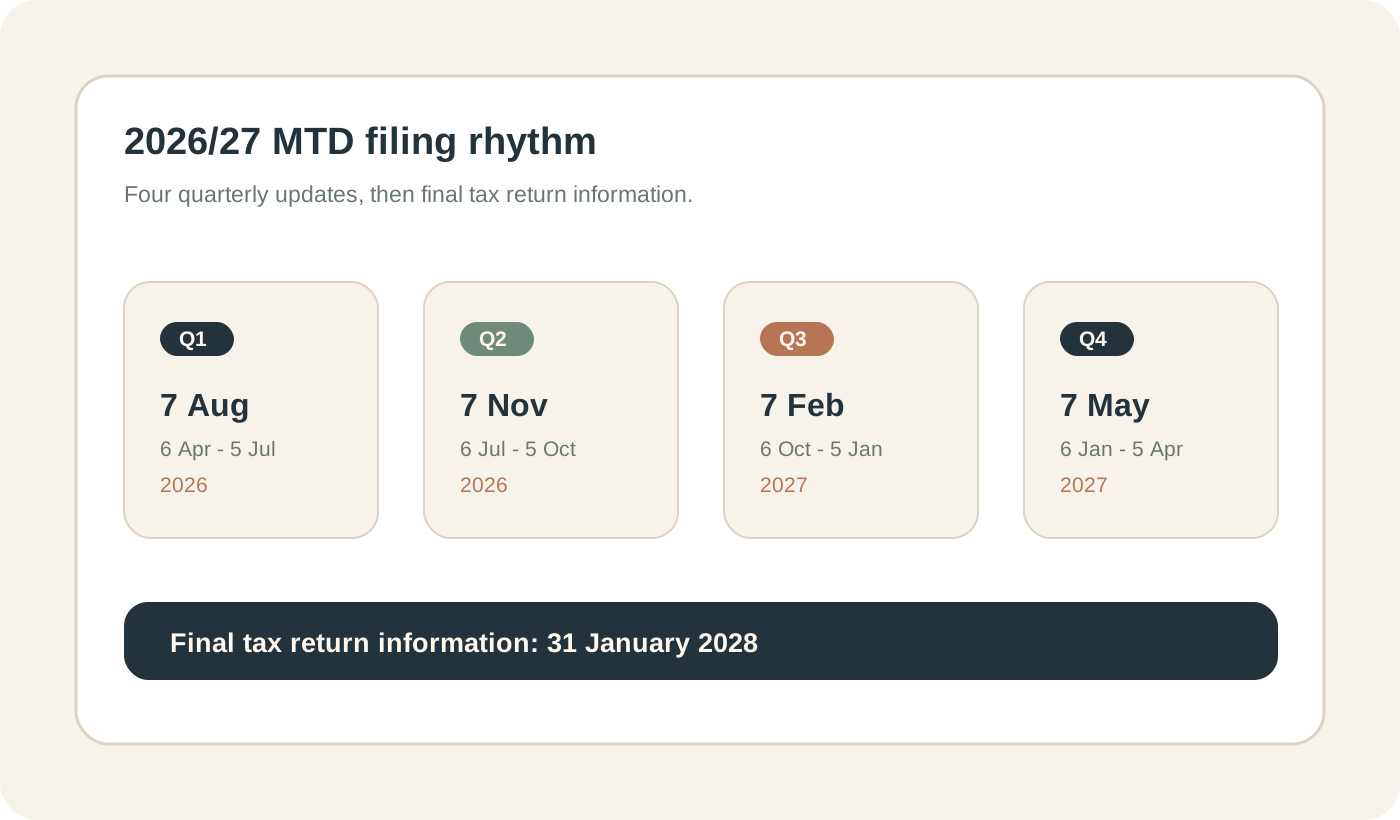
Once you are in Making Tax Digital, your compatible software will create quarterly updates from your digital records. For a standard tax-year basis, the first 2026/27 quarterly deadlines are:
- Quarter 1, covering 6 April to 5 July 2026: 7 August 2026
- Quarter 2, covering 6 July to 5 October 2026: 7 November 2026
- Quarter 3, covering 6 October 2026 to 5 January 2027: 7 February 2027
- Quarter 4, covering 6 January to 5 April 2027: 7 May 2027
- Final tax return information for 2026/27: 31 January 2028
The February deadline is easy to underestimate because it lands shortly after the normal 31 January Self Assessment deadline. If your records are still spreadsheet-heavy or kept after the fact, that timing can create unnecessary pressure.
What software do you need for Making Tax Digital?
HMRC does not provide its own MTD software. You need software that can keep digital records and submit updates in a way HMRC recognises. Common options for UK freelancers and small businesses include Xero, QuickBooks, FreeAgent, and Sage. Some businesses can continue using spreadsheets, but only if they use bridging software that connects those records to HMRC's systems.
The best software is not always the most complicated one. A sole trader with a simple service business may need a lighter setup than an ecommerce business with multiple sales channels, VAT complexity, stock, and payment processors.
A good MTD setup should make it easy to separate business and personal spending, capture receipts, categorise income and expenses, reconcile the bank account regularly, see likely tax earlier, and submit quarterly updates without rebuilding records from scratch.
Will HMRC charge penalties for late MTD quarterly updates?
HMRC says penalty points will not be applied for late quarterly updates in the 2026/27 tax year, but you still need to send quarterly updates before you can submit your final tax return information. Treat the first year as a setup period, not a reason to delay.
Sole trader vs limited company: should MTD change your structure?
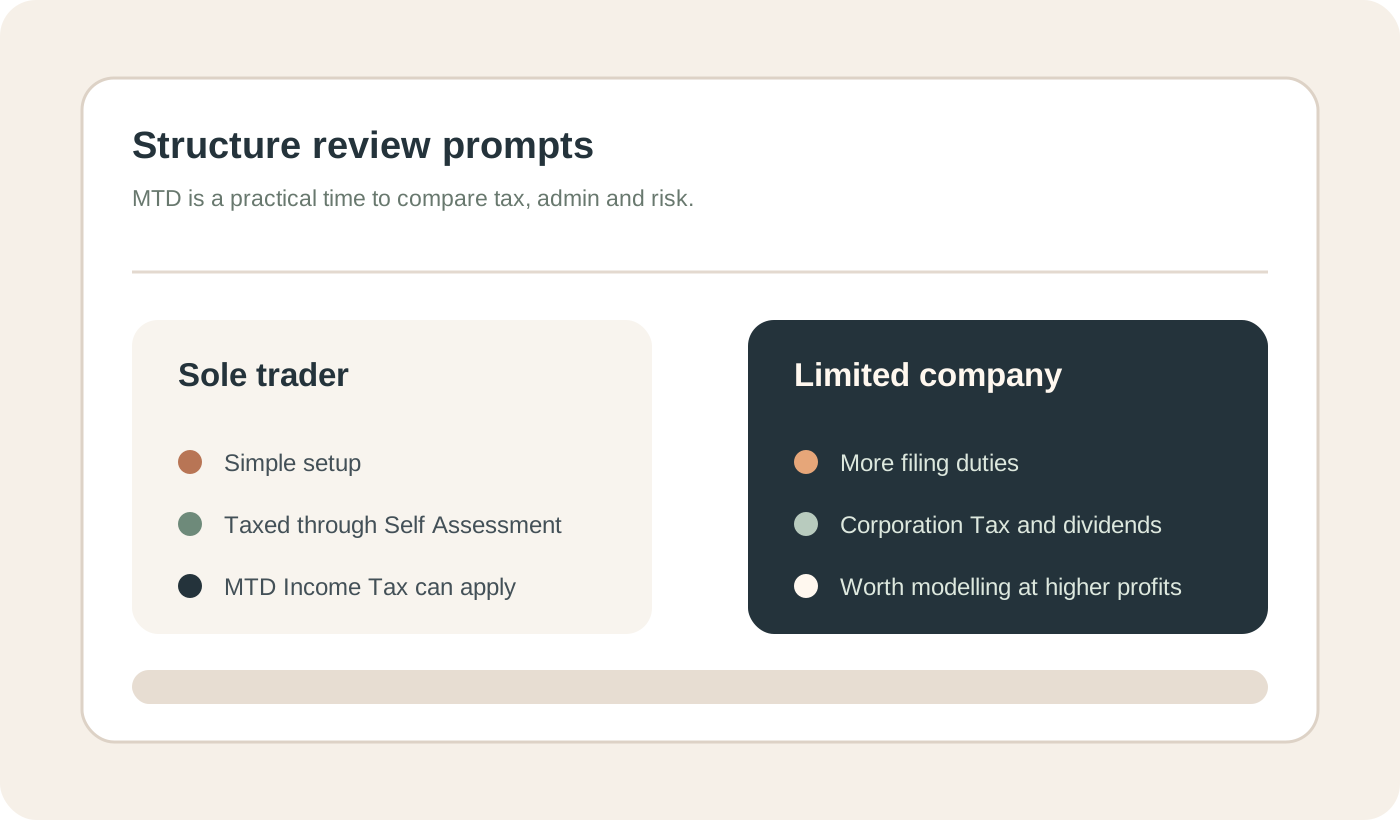
MTD has made more self-employed people ask whether they should remain as a sole trader or incorporate as a limited company. There is no universal answer. The right structure depends on profit level, risk, admin tolerance, future plans, and how you want to extract money.
As a sole trader, you and the business are legally the same person. Profits are taxed through Self Assessment. For 2026/27, the standard Personal Allowance remains 12,570 pounds, the main Income Tax rates for England, Wales and Northern Ireland are 20%, 40%, and 45%, and Class 4 National Insurance is 6% between 12,570 pounds and 50,270 pounds, then 2% above that.
A limited company is a separate legal entity. Corporation Tax is 19% for profits up to 50,000 pounds and 25% above 250,000 pounds, with marginal relief between those points. Directors often extract money through a mix of salary and dividends. For 2026/27, dividend rates above the 500 pound dividend allowance are 10.75%, 35.75%, and 39.35%, depending on your tax band.
Incorporating can reduce tax in some cases, especially where profit is higher and money can be left in the company. It also brings extra administration: company accounts, Corporation Tax returns, Companies House filings, payroll considerations, and clearer legal separation between personal and business finances. MTD alone is not a reason to incorporate, but it is a good moment to model both routes properly.
Tax planning moves to review before MTD pressure builds
MTD does not change the tax rates by itself, but it rewards cleaner records and earlier decisions.
- Claim every allowable business expense properly, including software, equipment, marketing, accountancy fees, business travel, training relevant to your trade, and use-of-home costs where appropriate.
- Keep personal and business finances separate so digital records are easier to reconcile.
- Check VAT registration if taxable turnover is over 90,000 pounds in any rolling 12-month period, or if voluntary registration could help because your clients are VAT-registered.
- Review pension contributions, especially if you are approaching higher-rate tax or operate through a limited company.
- Plan for Payments on Account so January and July bills do not become cash-flow shocks.
- Use MTD-style bookkeeping before you are legally required to, so the first mandated quarter is not your first test.
How to prepare for Making Tax Digital now
Start with the figure HMRC cares about: qualifying income. Look at your latest Self Assessment return and check gross income from self-employment and property before expenses. If you are close to a threshold, do not wait for a letter before planning the process.
Next, choose software that fits the business you actually run. A system that is used weekly will beat a more powerful system that is ignored until deadlines arrive. Then set a regular bookkeeping rhythm: bank reconciliation, receipt capture, expense categories, and a short monthly review of profit and tax.
Finally, decide whether your structure still fits. If your profits have grown, if you are taking on more commercial risk, or if your admin burden has changed, compare sole trader and limited company properly before making a move.
Sources checked
This guide was updated against HMRC and GOV.UK guidance available on 2 May 2026, including Use Making Tax Digital for Income Tax, quarterly update guidance, qualifying income guidance, and the 2028 threshold policy paper.
Final thoughts: the opportunity in Making Tax Digital
It is easy to see MTD as another compliance burden. But for businesses that approach it early, there is a genuine upside: better records, earlier tax visibility, cleaner cash-flow planning, and fewer January surprises.
At Aurestone Advisory, we help UK freelancers, sole traders, landlords, limited company directors, and small businesses get ready for changes like this without overcomplicating the process. If you need help choosing software, checking whether MTD applies to you, deciding whether to incorporate, or building a calmer tax routine, we can help you get clear.
Making Tax Digital resource centre
Check the rule, deadline and support that applies to you
Start with the complete guide, check your quarterly dates, or see how Aurestone can manage the digital records and submissions for you.
Frequently asked questions
Does Making Tax Digital apply to sole traders in 2026?
Yes, from 6 April 2026 it applies to sole traders and landlords with qualifying income over 50,000 pounds, based on the 2024/25 tax return.
Is the Making Tax Digital threshold based on turnover or profit?
It is based on gross qualifying income before expenses, not taxable profit. Self-employment income and property income can be combined.
Are MTD quarterly updates the same as tax returns?
No. Quarterly updates are summary updates from digital records. The final tax position is confirmed through the year-end tax return process.
Can I use spreadsheets for Making Tax Digital?
A spreadsheet alone is not enough. You need compatible software or bridging software that can connect your digital records to HMRC.
Does becoming a limited company avoid Making Tax Digital for Income Tax?
MTD for Income Tax applies to sole traders and landlords, not limited companies under Corporation Tax. But incorporation should be decided on tax, legal, admin, and commercial factors, not MTD alone.
What should I do first to get MTD-ready?
Check your qualifying income, choose compatible software, separate business and personal finances, and start keeping digital records before your first mandated quarter.
Topics
Need help getting MTD-ready?
Check your MTD position before the deadlines start
Aurestone can help you check whether Making Tax Digital applies, choose suitable software, clean up your records, and decide whether your current business structure still makes sense.
Next step
Want help applying this to your own tax and profit numbers?
Download the free tax guide, or book a quick review if you want Aurestone to help you spot what needs attention first.