
Key takeaways
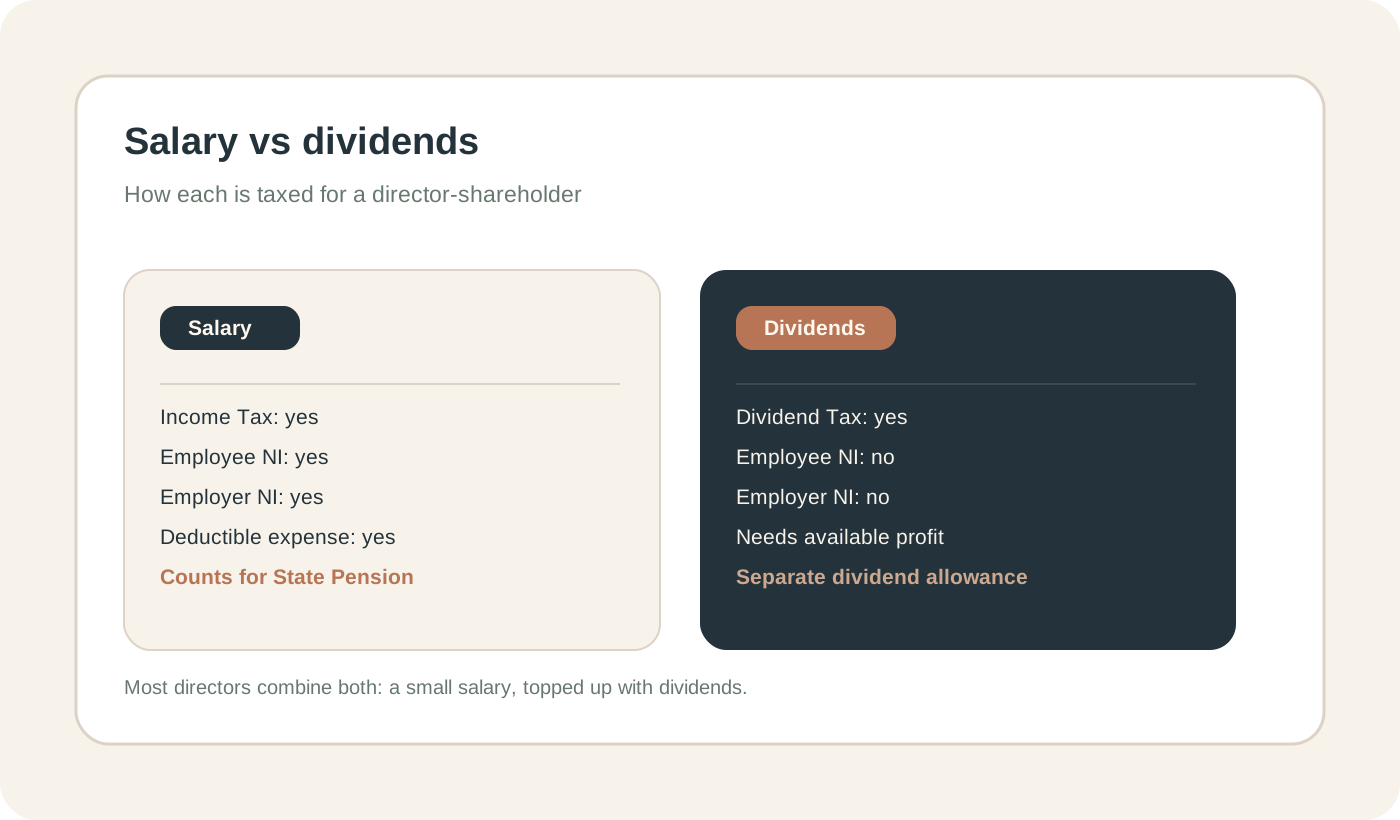
- Salary is subject to Income Tax and National Insurance (both employee and employer); dividends are not subject to National Insurance at all.
- A small salary up to the National Insurance threshold, topped up with dividends, is the most common tax-efficient structure.
- Dividends have their own tax rates and a separate annual dividend allowance.
- Dividends can only be paid from company profits after Corporation Tax — you can't pay a dividend the company hasn't earned.
- Illegal dividends and missing paperwork (board minutes, dividend vouchers) are common and costly mistakes.
Every limited company director eventually asks the same question: should I pay myself a salary, take dividends, or some mix of both? The honest answer is that a small salary combined with dividends usually works out most tax-efficient for most directors — but the right balance depends on your specific numbers.
Quick answer: which should I choose?
For most director-shareholders, a small salary set around the National Insurance threshold, topped up with dividends for the rest of what you want to draw, is the most tax-efficient combination. The exact split depends on your total income, other earnings, and how much profit the company has available.
How salary is taxed
Salary is treated like any other employment income: it's subject to Income Tax through PAYE, and both employee and employer National Insurance. It's also a deductible expense for the company, reducing the profit subject to Corporation Tax. A salary that counts towards your qualifying years for the State Pension, even if set below the point where you actually start paying NI, is one of the main reasons directors take some salary rather than none.
How dividends are taxed
Dividends are paid from the company's post-tax profit and are not subject to National Insurance at all. They're taxed at dividend tax rates, which are lower than equivalent Income Tax rates, and you have a separate annual dividend allowance before any dividend tax is due. Because dividends come from profit that's already had Corporation Tax deducted, the combined company-and-personal tax burden still needs to be looked at as a whole, not just the personal side.
A worked example
Compare two ways a director could draw the same total amount from the company.
| All salary | Small salary + dividends | |
|---|---|---|
| Structure | Full amount as salary | ~£9,100 salary, rest as dividends |
| Employee National Insurance | Yes, on the full amount | Only on the salary portion |
| Employer National Insurance | Yes, on the full amount | Only on the salary portion |
| Dividend Tax | No | Yes, on the dividend portion above the allowance |
| Typical result | Higher combined tax and NI | Noticeably lower combined tax and NI |
The combination usually results in noticeably less combined tax and National Insurance than taking the same total purely as salary, because the dividend portion avoids NI entirely, even though it's taxed at the dividend rates after the allowance.
Why the balance isn't the same for everyone
- Directors with other income (a second job, rental income) may want a different salary level
- Applying for a mortgage can favour a higher, more "provable" salary over dividends
- Company profit levels limit how much can be paid as dividends in a given year
- Pension contributions interact with salary level in ways worth planning around
Common mistakes to avoid
Paying dividends the company hasn't actually earned (an "illegal dividend") is a real risk if you draw money without checking retained profit first. Missing paperwork — no board minutes or dividend vouchers recording the decision — is one of the most common things HMRC and accountants flag on review, even when the dividend itself was affordable.
How Aurestone helps
We review each director's full picture — company profit, other personal income, and pension plans — to set a salary and dividend structure that's tax-efficient and properly documented, not just a generic formula. See our limited company accountant page for everything else we cover for directors.
What to read next
Sources checked
Checked against HMRC guidance on tax on dividends and National Insurance rates.
Frequently asked questions
Do I have to take a salary at all?
No, but most directors take a small salary because it counts towards State Pension qualifying years and is a deductible company expense, even if it's set below the point where NI actually becomes payable.
Can I take dividends every month like a salary?
Yes, as long as the company has sufficient distributable profit each time and the decision is properly documented with board minutes and a dividend voucher.
What happens if I pay a dividend the company can't afford?
It can be treated as an illegal dividend, which may need to be repaid to the company or reclassified, with knock-on tax consequences. We check profit levels before recommending any dividend.
Does the right salary/dividend split change every year?
It can, especially if profit, personal circumstances, or tax rates change — it's worth reviewing the split at least annually rather than setting it once and forgetting it.
Topics
Limited company accounting
Want the right salary and dividend split for you?
Book a free Tax & Finance Review and we'll work out the most tax-efficient way for you to pay yourself.
Next step
Want help applying this to your own tax and profit numbers?
Download the free tax guide, or book a quick review if you want Aurestone to help you spot what needs attention first.