
Key takeaways
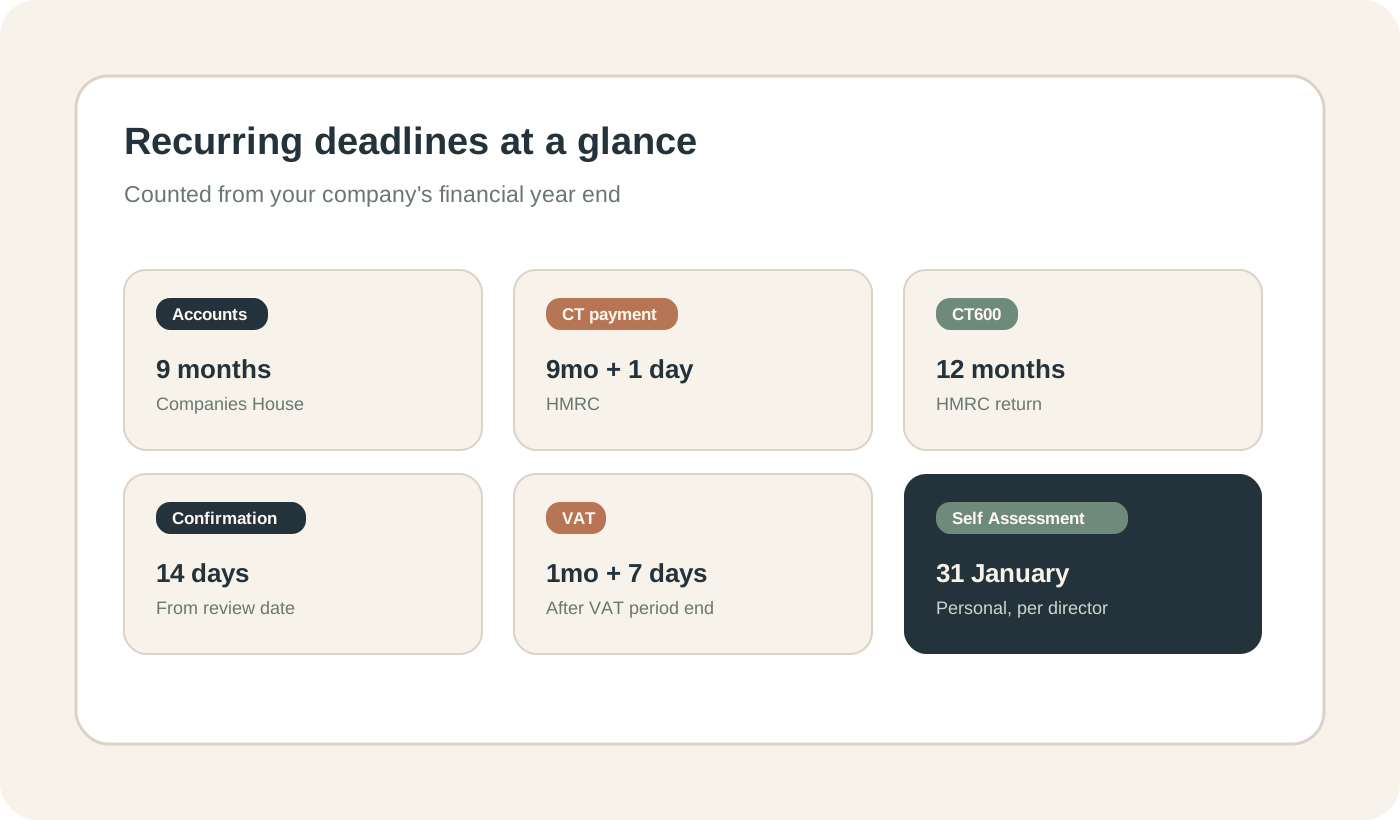
- Company accounts are due at Companies House within 9 months of your financial year end.
- Corporation Tax is due within 9 months and 1 day of your year end, but the CT600 return has a longer 12-month filing window.
- The confirmation statement is due annually, within 14 days of your review date.
- VAT returns (if registered) are usually due one month and 7 days after each VAT period ends.
- Directors also have a personal Self Assessment deadline of 31 January, separate from any company deadline.
A limited company has more recurring deadlines than most directors expect, and they don't all fall on the same date or even the same body — some go to Companies House, some to HMRC, some are personal rather than company obligations. Here's the full picture in one place.
Quick answer: what are the main deadlines?
The core recurring deadlines for a UK limited company are: annual accounts to Companies House (9 months after year end), Corporation Tax payment (9 months and 1 day after year end), the CT600 Corporation Tax return (12 months after year end), the confirmation statement (annually, within 14 days of your review date), and — if applicable — VAT returns, PAYE/payroll RTI filings, and each director's personal Self Assessment return by 31 January.
The full deadline calendar
| Obligation | Deadline | Owed to |
|---|---|---|
| Annual accounts | 9 months after year end | Companies House |
| Corporation Tax payment | 9 months + 1 day after year end | HMRC |
| CT600 return | 12 months after year end | HMRC |
| Confirmation statement | Within 14 days of review date | Companies House |
| VAT return (if registered) | 1 month + 7 days after period end | HMRC |
| Director Self Assessment | 31 January | HMRC (personal) |
Annual accounts at Companies House
Your first set of accounts is usually due 21 months after incorporation; after that, accounts are due within 9 months of each financial year end. Missing this deadline results in automatic, escalating late filing penalties from Companies House, regardless of whether any tax is owed.
Corporation Tax payment vs the CT600 return
These are two separate deadlines that often get confused. Corporation Tax itself must be paid within 9 months and 1 day of your year end. The CT600 return, which reports the calculation, has a longer window — 12 months after your year end. In other words, you pay first, then file the full return, not the other way round.
Confirmation statement
Every company must file a confirmation statement at least once every 12 months, confirming that key company details (directors, registered office, shareholders, PSCs) are up to date. It's due within 14 days of your review date, which is usually the anniversary of incorporation or your last confirmation statement.
VAT returns, if registered
If your company is VAT registered, returns are typically due one month and 7 days after the end of each VAT quarter, filed digitally under Making Tax Digital for VAT. Payment is due by the same deadline as the return.
Payroll and PAYE deadlines
- Monthly RTI submissions to HMRC each time you run payroll
- P60s issued to employees (including directors on payroll) by 31 May
- P11Ds, if you provide taxable benefits, by 6 July
- PAYE and National Insurance payments, usually due by the 22nd of each month if paying electronically
Director Self Assessment
Separately from the company's own deadlines, each director usually needs to file a personal Self Assessment return by 31 January following the end of the tax year, covering salary, dividends, and any other personal income — this is a personal obligation, not a company one, and doesn't move if the company's year end changes.
A simple way to stay on top of it all
- Know your company's specific year end and count deadlines from that date, not the calendar year
- Track Companies House and HMRC deadlines separately — they're not the same date
- Set a reminder for your confirmation statement review date every year
- Keep director Self Assessment on a completely separate personal deadline
How Aurestone helps
We track every deadline — Companies House, Corporation Tax, VAT, payroll, and each director's personal Self Assessment — so nothing is missed and no penalty comes as a surprise. See our limited company accountant page for the full service.
What to read next
Sources checked
Checked against guidance on Companies House filing deadlines and Corporation Tax deadlines.
Frequently asked questions
Do Corporation Tax payment and the CT600 return have the same deadline?
No — Corporation Tax must be paid within 9 months and 1 day of your year end, but the CT600 return itself isn't due until 12 months after your year end.
What happens if I miss the confirmation statement deadline?
Companies House can take action against the company, including striking it off the register in serious cases, so it shouldn't be treated as a minor filing.
Is the director's Self Assessment deadline the same as the company's?
No, they're completely separate. Personal Self Assessment is due 31 January regardless of when the company's own deadlines fall.
Can Aurestone track all these deadlines for me?
Yes — this is exactly what we do for limited company clients, across Companies House, HMRC, VAT, payroll, and personal Self Assessment.
Topics
Limited company accounting
Tired of tracking deadlines yourself?
Book a free Tax & Finance Review and let us take over the tracking, filing, and reminders.
Next step
Want help applying this to your own tax and profit numbers?
Download the free tax guide, or book a quick review if you want Aurestone to help you spot what needs attention first.