
Key takeaways
- The first MTD Income Tax quarterly update deadline for the first group is 7 August 2026.
- Affected taxpayers need digital records from 6 April 2026, or 1 April if they use a 31 March accounting year end and calendar update periods.
- Quarterly updates are summaries of income and expenses, not full tax returns.
- You still need a final tax return after the end of the tax year.
- HMRC will not apply penalty points for late quarterly updates in 2026/27, but the updates are still required.
- You can check your position, choose compatible software, and sign up through the official GOV.UK services linked below.
The first Making Tax Digital quarterly update deadline is closer than it feels.
If you are in the first MTD Income Tax group, you need to keep digital records from the start of your 2026/27 accounting period and send your first quarterly update by 7 August 2026. For most people using standard update periods, this first update covers 6 April to 5 July 2026.
This practical guide explains how to check whether MTD applies to you, where to sign up, how to choose compatible software, what the first update includes, and what to review before you submit.
Quick answer: who has a 7 August 2026 MTD deadline?
The 7 August 2026 deadline applies to the first group required to use Making Tax Digital for Income Tax.
You generally fall into this group if you are an individual registered for Self Assessment, receive self-employment or property income, and your total qualifying income shown on your 2024/25 tax return was more than £50,000. Qualifying income is broadly your gross self-employment and property income before expenses, not your profit. The sources are combined, so £35,000 of self-employment income plus £20,000 of property income may put you over the threshold.
The threshold reduces to more than £30,000 from April 2027 and more than £20,000 from April 2028. Not receiving an HMRC letter does not remove your responsibility to check. Use HMRC's official MTD checker to find out when you need to start and whether an exemption may apply.
Check, choose software, or register for MTD
Use these official HMRC services rather than links in unsolicited emails or messages:
- Check if and when you need to use MTD for Income Tax
- Work out your qualifying income
- Choose HMRC-recognised MTD software
- Sign up for MTD for Income Tax
- Read HMRC's step-by-step MTD guide
Choose your software before signing up. To register, you normally need the Government Gateway user ID and password linked to Self Assessment. You may also need your business start date, business name and address, type of trade, the date your property income began, and details of every active self-employment or property income source. If an accountant handles MTD for you, they can complete the agent signup process instead.
What is due by 7 August 2026?
By 7 August 2026, affected taxpayers need to submit their first quarterly update through MTD-compatible software.
For standard update periods, the first update covers records from 6 April to 5 July. If your accounting period runs from 1 April to 31 March and you select calendar update periods in your software before the first submission, it covers 1 April to 30 June. The filing deadline is 7 August in either case.
Your software totals the digital income and expense records for each self-employment and property business. HMRC describes the update as a summary, not a tax return, so year-end accounting and tax adjustments are not normally required at this point. Updates are cumulative: each one covers the start of the tax year through to the end of its latest update period. Read HMRC's quarterly update guidance for the reporting details.
What records need to be digital?
You need to create and preserve digital records of your self-employment and property income and expenses. These can include sales, fees, rent, stock, travel, office costs, repairs, insurance, professional fees, bank charges and finance costs.
A bank feed helps, but imported transactions still need to be checked and categorised. A folder of scanned receipts alone is not a complete digital accounting record. Record transactions as close to the date they happen as practical and keep the supporting invoices and receipts required under the normal record-keeping rules.
If you use spreadsheets, do not assume they qualify by themselves. You may need bridging or other compatible software to preserve the required digital links and send updates. See HMRC's digital record guidance.
What to sort before the first quarter closes
Before submitting, reconcile the records rather than trusting an imported total. Check that:
- you know whether MTD applies to you for 2026/27
- your software is MTD-compatible for Income Tax
- your business and property income sources are set up correctly
- bank feeds or import processes are working
- income and expenses are being categorised consistently
- cash income, card processors, online marketplaces, mileage and receipts have not been missed
- transfers, loan movements and personal spending have not been recorded as business income or expenses
- uncategorised and duplicate transactions have been resolved
- each separate self-employment and property business is set up correctly
- you know who will submit the update: you, your accountant, or your bookkeeper
- your software authorisation with HMRC is active before deadline day
Common first-quarter mistakes
The first MTD quarterly update is where messy setup tends to show. Watch for:
- using bookkeeping software that handles invoices but is not ready for MTD Income Tax submissions
- mixing personal and business spending without clear categories
- forgetting property income when checking the threshold
- assuming the quarterly update replaces the annual tax return
- waiting until the deadline week to connect software to HMRC
- not giving your accountant authority or access early enough
Do you pay tax every quarter under MTD?
MTD quarterly updates do not automatically mean you pay Income Tax every quarter.
The update tells HMRC about income and expenses during the year. Your final tax position is still worked out after the tax year ends, when the annual return or final declaration includes the full picture.
That said, cleaner quarterly records should make tax planning easier because you can see your profit and likely tax bill earlier.
What about penalties?
HMRC has confirmed that it will not apply penalty points for late quarterly updates during the 2026/27 tax year. This first-year concession does not cancel the filing obligation. You must still keep digital records and send all required quarterly updates before you can submit your tax return.
The concession does not protect you from penalties connected with your annual tax return or late tax payments. For tax years after 2026/27, missed quarterly updates can attract penalty points; reaching the relevant threshold can trigger a £200 penalty and further £200 penalties for later missed obligations. Check HMRC's MTD penalty guidance.
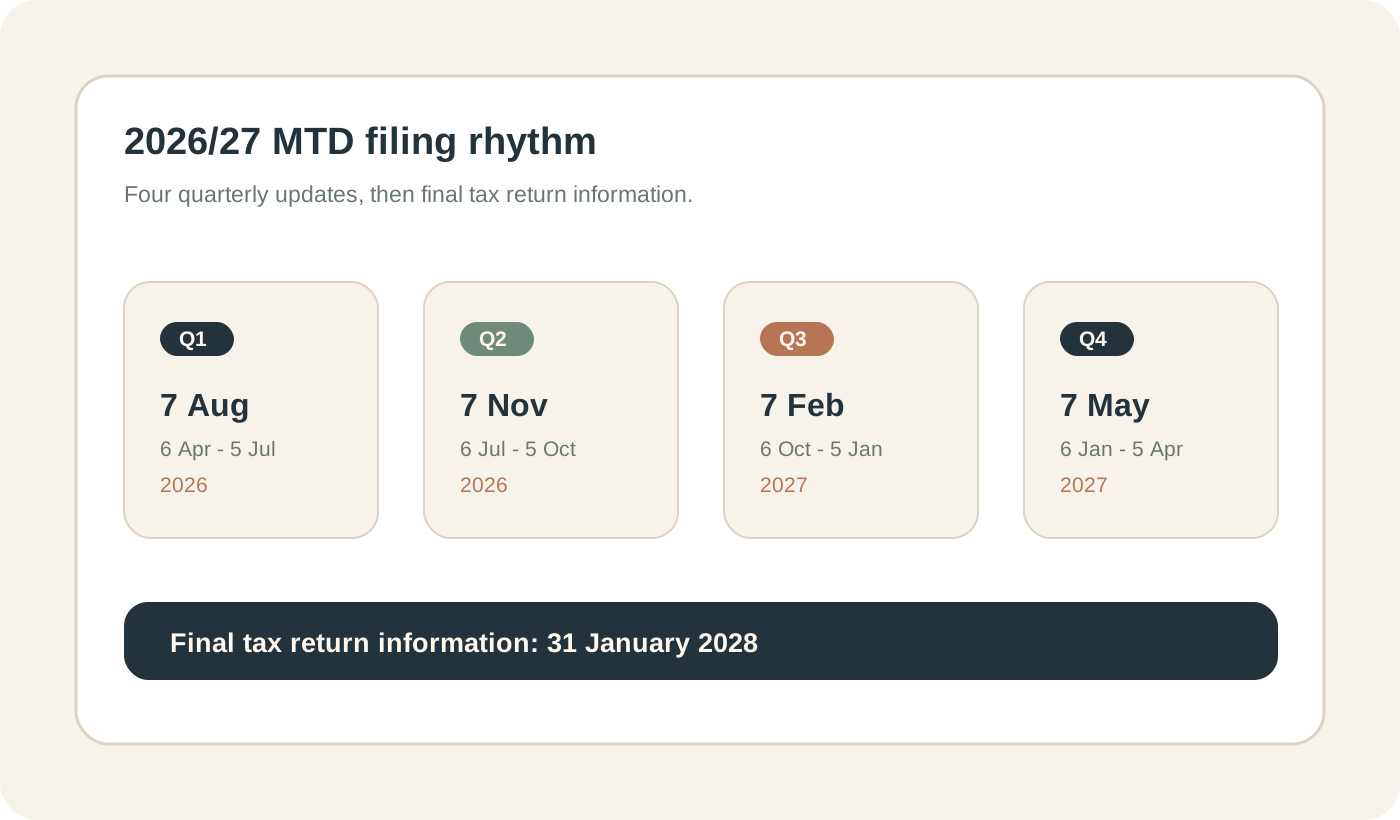
MTD quarterly deadlines for 2026/27
Add all four dates to your calendar now:
- First quarterly update: 7 August 2026
- Second quarterly update: 7 November 2026
- Third quarterly update: 7 February 2027
- Fourth quarterly update: 7 May 2027
- MTD tax return and payment deadline for 2026/27: 31 January 2028
Simple action plan before 7 August 2026
If you think you are in scope, use this action plan:
- Use HMRC's checker and confirm your qualifying income from all self-employment and property sources.
- Choose HMRC-recognised software that supports every income source you have.
- Sign up yourself or confirm that your accountant has signed you up.
- Connect your HMRC account and test the authorisation process.
- Clean up income and expenses for April, May, and June.
- Review unusual transactions before submitting.
- Ask your accountant to review the setup before the first deadline.
How Aurestone can help
Aurestone Advisory helps sole traders, landlords, and small business owners prepare for MTD with cleaner records, software setup, bookkeeping routines, and deadline planning.
If you are not sure whether the first 7 August 2026 deadline applies to you, we can review your income sources and help you set up a calmer reporting process before the first quarterly update is due.
If the deadline has already passed, read Missed the 7 August MTD Deadline? What to Do Next.
Important note
This article is general educational guidance, updated on 14 July 2026. MTD responsibilities can depend on your income, accounting period, business structure and eligibility for an exemption. Always use the current GOV.UK MTD guidance or speak to a qualified accountant before making decisions.
Making Tax Digital resource centre
Check the rule, deadline and support that applies to you
Start with the complete guide, check your quarterly dates, or see how Aurestone can manage the digital records and submissions for you.
Frequently asked questions
When is the first MTD quarterly update deadline?
For the first mandatory MTD Income Tax group, the first quarterly update deadline is 7 August 2026. Standard update periods cover 6 April to 5 July; calendar update periods generally cover 1 April to 30 June. Both use the same deadline.
Does an MTD quarterly update replace my tax return?
No. Quarterly updates are summaries of income and expenses during the tax year. You still need to finalise your tax position after the end of the tax year through the required final submission or tax return process.
Do I need MTD software before August 2026?
Yes, if you are in scope. The records need to be kept digitally from the start of the tax year, so software should be ready well before the first update deadline.
What if I am both self-employed and a landlord?
Both income sources can count towards qualifying income. You should check their combined gross income before expenses when deciding whether MTD applies. Your software will also need to keep the appropriate businesses or income sources separate for reporting.
Where can I check if I need MTD and register?
Use the official GOV.UK MTD checker at https://www.gov.uk/guidance/find-out-if-and-when-you-need-to-use-making-tax-digital-for-income-tax. If MTD applies, choose compatible software first, then register at https://www.gov.uk/guidance/sign-up-for-making-tax-digital-for-income-tax. Your accountant can sign you up as an agent if they manage MTD for you.
Can I apply for an exemption from MTD?
Some people are automatically exempt, while others may be able to apply if it is not reasonable or practical for them to use digital tools because of age, disability, location, religion or another relevant reason. Low confidence with computers alone does not automatically create an exemption. Use HMRC's official MTD checker and exemption guidance before assuming the rules do not apply.
Do I pay Income Tax every quarter under MTD?
No. Quarterly updates report summaries of business and property income and expenses. Your tax return and payment remain due after the end of the tax year, although up-to-date records can help you estimate and set aside tax earlier.
Topics
MTD deadline coming up?
Check whether the 7 August deadline applies to you
Aurestone can review your income, software, and bookkeeping setup so your first MTD quarterly update is not a last-minute rush.
Next step
Want help applying this to your own tax and profit numbers?
Download the free tax guide, or book a quick review if you want Aurestone to help you spot what needs attention first.